Saturday, June 27, 2020

Equilibrium

Equilibrium 

I sit on the beach. Two hours ago I was in the woods. I walked down a serpentine path and watched a snake slither into the grass.
The tide has turned as I sat here and watched. It's all a balance.
It is equilibrium.

I'm contained on an island as a pandemic rages through the world, as it surges in my homeland. I am safe here, but I watch my loved ones from afar in fear. What is my safely compared to theirs? Do we balance each other or cancel each other out? It's all equilibrium.

A black man was murdered by police in Colorado. He was walking down the street, minding his own business. He reminds me so much of my oldest son, but for the color of his skin. I can't balance that out. I cry for him, for all of them. My boy is safe, their boy is dead. That is not balance. No equilibrium.

Sunrise, sunset. Tide comes in, tide goes out. Easy come, easy go. It's a balance. It's equilibrium.


Monday, March 23, 2020

Getting My Teacher Voice On: Talking to You Mom's and Dad's

OK mamma’s and daddy’s, I hope you are doing ok. I hope you are not overwhelmed, and I hope your littles are doing great too! Here, let me give you a hug! 
Ok then, here’s what I’d like us all to do. Turn off the TV and the constant Covid19 updates. Get out some paper, some Lego, some blocks, something! and dump it on the floor or the table. Yes, I said that. Let your littles make a mess! Let them explore, problem solve, and create! Let them do things on their own! As unfortunate as this situation is for most of us, I am choosing to see a silver lining. You see, as a kindergarten teacher, I have a lot of concerns for the children of today. They don’t have a chance to play outside, they don’t have a chance to imagine. So much of their lives are scheduled (and I am laying no blame on anyone other than our society), that they haven’t had the childhood you and I and our parents had. And, because of this, they come into Kindergarten behind. Not academically, but physically. They can’t sit up for long periods of time, they can’t hold crayons, they struggle to literally stand up from sitting on the floor, because they don’t have a chance to build those muscles.
But guess what? This little “break” we’re taking? It’s giving them that chance- if we allow it!
Imagine if you will...35 years from now. We could be raising the most creative generation we’ve seen in a hundred years. You know how we put a man on the moon? Do you think those scientists and engineers spent their early, formative years scheduled to the max? Nope! They spent a lot of time on their own, learning to problem solve, learning to think creatively, learning things no one can teach you, you just have to learn it on your own. And now our kids can have that chance! Now more than ever! 
So, please, stop worrying about their academic education. They will get it! I promise they will! Let them play, mom’s and dad’s! Let them get bored! Let them dream! Let them create, and problem solve, and collaborate! Let them go outside and splash in puddles and climb trees and engage in risky play! Let them get messy and make a mess! 
Let them be the kids they were created to be! And then you can make them clean up their mess when they’re finished.

Monday, July 15, 2019

Writing and Rhyming

This week in #TeachersWrite, we are discussing children's books that rhyme. As most educators know, there are a plethora of rhyming books out there. How many are actually good though? Yes, many are cute, and most follow similar rhythms, but finding one that is actually *good* isn't always easy. The two mentor texts this week fall under the *good* category. They tell a wonderful story, while the rhythm stays predictable, making them easier to read.
As a Kindergarten teacher, I like to use rhyming books because they can be easy for our youngest readers to anticipate what will happen next. I will definitely be using these two books in my classroom in the upcoming school year.

For the #teacherswrite assignment, we were to write the beginnings of a rhyming book. Remember how I said their are many rhyming books out there, but few truly *good* books? You want to know why? Because writing quality poetry is hard! Here is my first stab at it:

What is a story? What is a book?
How can we find out? Let’s take a look.
Stories take our minds to other places and then,
A book lays it out from beginning to end.
The book is the vessel, the story a friend.

When was the last time you tried to write a poem? Why not give it a go now!

Wednesday, July 10, 2019

Telling a Story: 5 People, 3 Angles

Today’s exercise was fun. We first read the book “Joan Proctor: Dragon Doctor” which is the story of Joan Proctor, the first female curator of the Reptile House at the London Zoo. This non-fiction story is written is such an attractive way, using clever turns of phrase and alliterations. I quickly fell in love with this book and cannot wait to use it in my classroom this coming year. Among other things, it’s a great way to introduce what being a scientist is about (observing, taking careful notes, illustrating, etc), but there is so much more that can be used for writing instruction, and just plain enjoyment of reading.


After reading the book, Kate gave us a challenge: Think of five fascinating people, and then imagine three different angles for telling their story. I have to admit, thinking of five people was the hardest part. Once I got started on the angles for the stories, the ideas seemed to fly! I chose five people that I find fascinating right now. Tomorrow I am sure I would think of others. Here are my five people, and the three different angles I could use to tell their stories:

Five people whose lives I find interesting and three angles to tell their story:
   
    1. Langston Hughes (American poet)
-Take a poem of Hughes’s and fashion his life story around the verses
-Using the rhythmic parameters of a jazz song, write a story about his involvement in the Harlem Renaissance
-Hughes came from the Midwest but lived all over the world. Write about his life from the perspective of the Midwesterner wanting to explore the world (I have personal feelings about this, lol)
   
     2. Sylvia Ashton-Warner (New Zealand educator)
-From the perspective of a Maori child
-From the perspective of a Maori parent
-From the perspective of  a modern educator in New Zealand
   
     3. Megan Rapinoe (American soccer star)
-Beginning with her brothers incarceration and weaving his story in with her story
-From the perspective of playing soccer. Like a How-to book only weaving her story around it
-Using “This is the house that Jack built” as a foundation, tell her story (This is the shoe that kicked the shot that won the world-cup for the fourth time…)
   
     4. Andrew Carnegie (American industrialist and philanthropist) 
-A picture book using a model of a Carnegie library
-A story of his work with Booker T. Washington
-A book about the winners of the Carnegie Hero Fund
     
     5. Oprah Winfrey (modern celebrity and philanthropist) 
- A story about her dogs
- A story about best friends with Oprah and Gayle as subject matters
- From the perspective of “What I Know For Sure” tell her story

Sometimes the hardest part of writing is coming up with the subject matter, the second hardest is thinking of the angle. As teachers, using these types of mentor texts is an excellent way to model writing that goes beyond "what I did last night". It gives us a chance to show our students that we can tell someone else's story too. And we can do it in a way that is original, and one that brings the reader into the story organically.
What about you? Can you think of five people that fascinate you, and three different angles to tell their story?

Tuesday, July 9, 2019

On Language and Seasons

In today's writing exercise, we are looking at word choices and phrasing. Words, language, these are the foundations of society and of culture. When we lose our words, we lose our community/ Our history and culture are dependent upon the words we use. I am sure it is no coincidence that we are looking at this book first, as this is the United Nations year of Indigenous Languages: The International Year of Indigenous Languages is a United Nations observance in 2019 that aims to raise awareness of the consequences of the endangerment of Indigenous languages across the world, with an aim to establish a link between language, development, peace, and reconciliation.

We, in North America, have a regretful history of colonization and attempts at erasing culture and language from our Indigenous people groups. From residential "Indian" schools, to blankets laced with small pox diseases, to forcing whole people groups off their land. Even today, in the 21st Century we have relegated people to reservations without proper running water, we have ignored the poverty that the (let's face it) predominantly white culture has created, we have allowed Indigenous women to go missing and murdered without proper investigations. So many horrible things, and yet the cultures strive to live on. That is resilience. That is amazing. 

While I am doing this writing course, I am also taking a course provided through our provincial government and the Truth and Reconciliation Committee of Canada. I am learning, and being reminded of the rich culture that indigenous people have had for thousands of years, that was almost lost because of the whit European colonizers idea to "solve the indian problem". Slowly, many are reclaiming their almost lost heritage. It is a long road, with many battles yet to fight.

In the book "We are Grateful: Otsaliheliga" (a book about the Cherokee year), we are introduced to Cherokee words. Words that, by some admission, are close to disappearing (Cherokee Leaders). I was really excited to see this was the first choice for many reasons highlighted above. I am looking forward to adding this into my classroom library. 


Daily Assignments:

Jot down the phrases that feel particularly evocative, the places where the word choice really sing. What did you notice?

-Celebrate blessings and reflect on struggles (celebrate and reflect)

-Wear new clothes, forget old quarrels (new and old)

-Remember our ancestors who suffered hardship and loss on the Trail of Tears, and have hope as our elisi, Grandma, cradles the newest... (Remember hardship, have hope in the future)

-Bears sleep deep, snow blankets the ground (sleep and blanket play off of each other here)

-Old and young

-Showers fill streams and shoots spring up

-practice patience

-click-clack sticks

I like how what could be considered opposites play off of each other to make similarities. I like the juxtaposition of the words, how they bounce off of each other and work together.

Try a little writing of your own about gratitude. Choose a season and using Traci’s structure as a mentor text, write a few lines about that season and what it means in your world, what you’re grateful for, and perhaps how you express that gratitude. Consider a repeated refrain. Consider word choice. Make that season sing.

Spring in Prince Edward Island

The snow falls down, the light stays longer in the sky

The air is cool, but sun warms the earth

Soon the snow begins to melt and the streams thaw. Water flows in the rivers again.

Ice breaks up and flows out to sea, while seals swim upstream to fish in shallow waters

Spring is coming to Abegweit, the cradle in the waves.

To close this post I want to point out a beautiful rendition of the song Blackbird, originally recorded by The Beatles. The song was written during height of the Civil Rights movement in the southern United States. It's a song about a group of people, long oppressed, finding the chance to be free at last. 

In the spring of 2019, a young Mi'kmaq woman recorded this song in her native language. For me, as a listener, it highlights the rise of the Indigenous People groups in Canada. It's haunting, and beautiful. I hope you can listen and enjoy


#TeachersWrite: Writing about Wonder


I've been wondering lately- isn't it funny how some downtime from the classroom helps get those juices stirring? Some years I need summer break to de-stress and de-program from the past year, other times it's the perfect time to dream and plan for the year to come. Most of the time it's a combination of the two.
This year is a bit different for me because it's the first time in three years I haven't been working on my masters degree. I admit I was at a bit of a loss with what to do with my time! After a post I made on Twitter about wanting to put together a retreat to re-imagine kindergarten literacy, a friend tagged me in another post about a summer writing session using mentor texts by Kate Messner (https://www.katemessner.com/) . It seemed like the perfect thing to do- it bridges that "learning gap" I've been trying to maneuver, and it helps me look at my own writing instruction from a new perspective. So for the next few weeks, I am going to use this blog (the same blog I swear every summer! that I will be using more during the school year) to post my writing exercises.

I am excited about this! I am excited to look into some excellent books that I can use in my classroom. I am excited to have a chance to think about writing in a refreshing way. And I am excited to find new ways to integrate literacy into a play based kindergarten classroom.

My first writing exercise comes from here:
https://twitter.com/KateMessner/status/1148314379563216902

Instead of asking children to "write about what they know", why not ask them to "write about what they wonder?"

For this practice, I sat down for 10 minutes and just wrote out things that I wondered about. Here is what I came up with:

What do I wonder about?
-electricity: how does it work?
-what are the birds really saying to each other at 6 in the morning?
-do animals have a civilization that we humans know nothing about?
-are we really made of stardust?
-energy unites all things, what does that mean though?
-why are some people successful and others aren't?
-what makes one singer famous?
-how much do humans contribute to climate change?
-how can we truly solve inequity in the world?
-why do people get so offended when you raise a perspective they hadn't considered?
-how much of interpretation of facts comes down to perspective?
-why aren't more people empathetic to the plight of others?
-why won't the hummingbirds let me take their pictures?
-why is it so easy for me to lose weight in the summer?
-how much do our current cultural expectations impact our health and well-being?

I really liked this exercise. I like writing down those "wonderings". I look forward to bringing this into my classroom in the fall. What about you? What do you wonder about?

Friday, July 13, 2018

Co-Creating Curriculum in Kindergarten

What is curriculum? What do you mean when you say you "co-create" curriculum with your students? What are the challenges of this? And what are the benefits? How do you assess the learning? These are questions that are commonly asked when the idea of co-creating curriculum is brought up.

To start off, I'd like to define curriculum as what we teach during the course of a day, a month, a year of school. It is the flesh and blood of our learning, whereas our outcomes (what we are expected to know) which are set forth for us by the Department of Education and the Government of Prince Edward Island, those are the bones. And, just like a body, our bones are very similar, our flesh and blood though, is quite different from person to person, so our curriculum is different, but we reach the outcomes just the same.

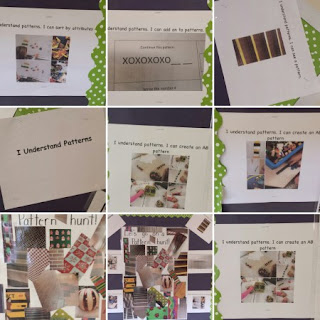
But what, then, is curriculum co-creation? It is simply, allowing students to have a voice in what they are learning. It is taking their interests and needs into account when planning. It is involving the class in the planning. Sometimes this springs from an idea someone has, or a book we read, or even an outcome we are learning. This past year, we really enjoyed learning about patterns. What began as a simple unit, expanded into an exploration of patterns in each aspect of our lives, from the simple two part patterns we create, to the patterns on clothes, in the bricks of the school, the patterns in the books that we read.


Later on in the year, we read the book, What Am I? which is about an octopus. It brought up so many questions that we ended up veering off on a unit about octopus.We were able to cover outcomes from reading, writing, math, science, creative arts, technology, among others. We wrote down facts we read from books and websites, we were able to incorporate our five senses, counting and part-part-whole activities, we wrote a song and wrote a book about what we learned, we were able to use our Chromebooks to discover facts on the internet, as well as to watch YouTube videos with octopus. All of this met specific outcomes that we were working on.
What I really like about co-creating curriculum with my students is how it brings in the families as well. The students go home and are excited to talk about what they've learned because it's something that they started, as well as something tangible that they can tell their parents. Rather than, "I learned how to say sight words..." they can say, "Did you know an octopus can walk across the ocean floor?" and they can tell their parents where they've learned that. 

Jennifer Heinrichs, in her article, "The Co-Creation of a “Kinder Garden", (Canadian Children, 2016), says, "Schooling is one form of education. It does not include the entire learning in a child’s lifetime of knowledge attainment. When teachers truly internalize this differentiation, they can begin to weave together a curriculum that supports learning from the home as well," (p.18). Co-creating curriculum with our students, rather than for our students, allows them to share with their parents, and allows me, as the teacher, to connect with families on a more substantial level.

But is it more than that? I believe it is. It is learning to self-assess, and learning to understand what expectations are. Too many times, when we ask a kindergarten student what they should be expected to know, they cannot tell you, because they've never been given the chance to critically think about this. But when they are provided them exemplars, and given them time to question and discuss, I find they are quite able to help co-create their own learning criteria. Look back up at the Patterns picture. You will find a photo that says, "I Understand Patterns". How did they know they understood patterns? Because we discussed everything that they would need to know, and put that into practice. They were able to say, "We know what patterns are because they repeat themselves." "We can sort, based on attributes" (I always like to give them the proper words). And, "We can complete other peoples patterns." We had a wide variety of experiences around patterns, and developed our own criteria.

It isn't always easy to teach this way. It takes a different way of thinking than the typical educational model. Sometimes I have to defend what I am doing, other times I am commended. But, in the end, I teach this way because I know it is best for my students and their learning. Do I always teach this way? No. There are certain concepts that must be directly taught, there are expectations that by the end of kindergarten students will be reading and writing at a certain level, and there are certain math concepts that must be specifically taught. But what I strive to do, is find ways to fit in student interests, even during these direct teaching times. Because, in the end, learning isn't just about what we can do, per se, but rather about how empowered we feel when we are doing it. Co-creating curriculum encourages critical thinking, creativity, collaboration, and communication, all of which happen to be the Four Cs of 21st Century Learning. I believe co-creating curriculum, and its assessment pieces creates learners of today and sets us up to be learners for tomorrow as well.

(please click on the link below to watch a very short video created using Animoto):
Co-Creating in Kindergarten